Cloud & Infrastructure Recruitment That Keeps Your Business Running
Find the people who keep your systems reliable and your technology moving forward.
From cloud migration and infrastructure upgrades to network management and IT operations, Clicks helps Australian employers find permanent and contract technology professionals who can build, support and maintain critical environments.
Cloud & Infrastructure
professionals in our network
35+ years
Recruiting technology
talent in Australia
Australia-wide
Local Teams
National Reach
Our Clients
THE CLICKS DIFFERENCE
Why Employers Choose Clicks
Finding the right person is only part of the job. Clicks combines specialist tech market knowledge, operational depth and relationships that continue after placement, backed by local teams and national reach. It means better-informed hiring decisions, less admin for your team and support that stays in place once someone starts.
We know the market
Specialist recruiters who understand where skills, salaries and candidate expectations are moving.
We make hiring easier
From shaping the brief and sourcing through to onboarding, payroll, compliance and contractor support.
We stay involved
Our relationship with candidates doesn’t stop when they start work. That supports continuity and keeps us close to the talent market.
Local people. National capability.
Consultants who know their markets, backed by the systems and scale to handle complex hiring.
You’re in good hands with a Clicks Vertical Specialist
Hiring cloud and infrastructure professionals requires an understanding of both the technology and the environment they’ll be working in.
Our specialist recruiters work across cloud engineering, networks, infrastructure, platform operations and IT support. They understand the differences between building new environments, maintaining established systems and delivering large-scale technology upgrades.
We look beyond technical qualifications to find professionals with the experience, availability and working approach your team needs.
Nicole specialises in cloud, networks and infrastructure recruitment, working with employers to understand their technical requirements and connect them with the right people. Her experience includes building technology teams across the education, mining and financial services sectors. She brings a relationship-led approach to recruitment, with a focus on understanding each organisation’s environment and the capability it needs.
THE ENGINE
Cloud & Infrastructure hiring without the headaches
When cloud and infrastructure specialists are hard to find, the impact extends beyond recruitment. Projects can lose momentum, existing teams face additional pressure and critical systems may lack the support they need.
Clicks helps you define the technical capability you need, understand what the market can realistically supply and connect with cloud and infrastructure professionals who fit your platforms, systems and operating environment.
Your Hiring Challenges
Finding specialists with the right technical experience
Competition for experienced cloud and infrastructure talent
Critical vacancies putting pressure on existing teams
Balancing infrastructure upgrades with ongoing operations
Salary expectations and candidate availability
What Clicks Takes Care Of
Understanding your systems and technical requirements
Mapping relevant talent across the market
Engaging active and passive candidates
Providing salary and availability advice
Managing recruitment, onboarding and contractor support
Looking for your next tech hire?
Need to hire one person or build out a whole team? Tell us what you need and we’ll help you find the right people.
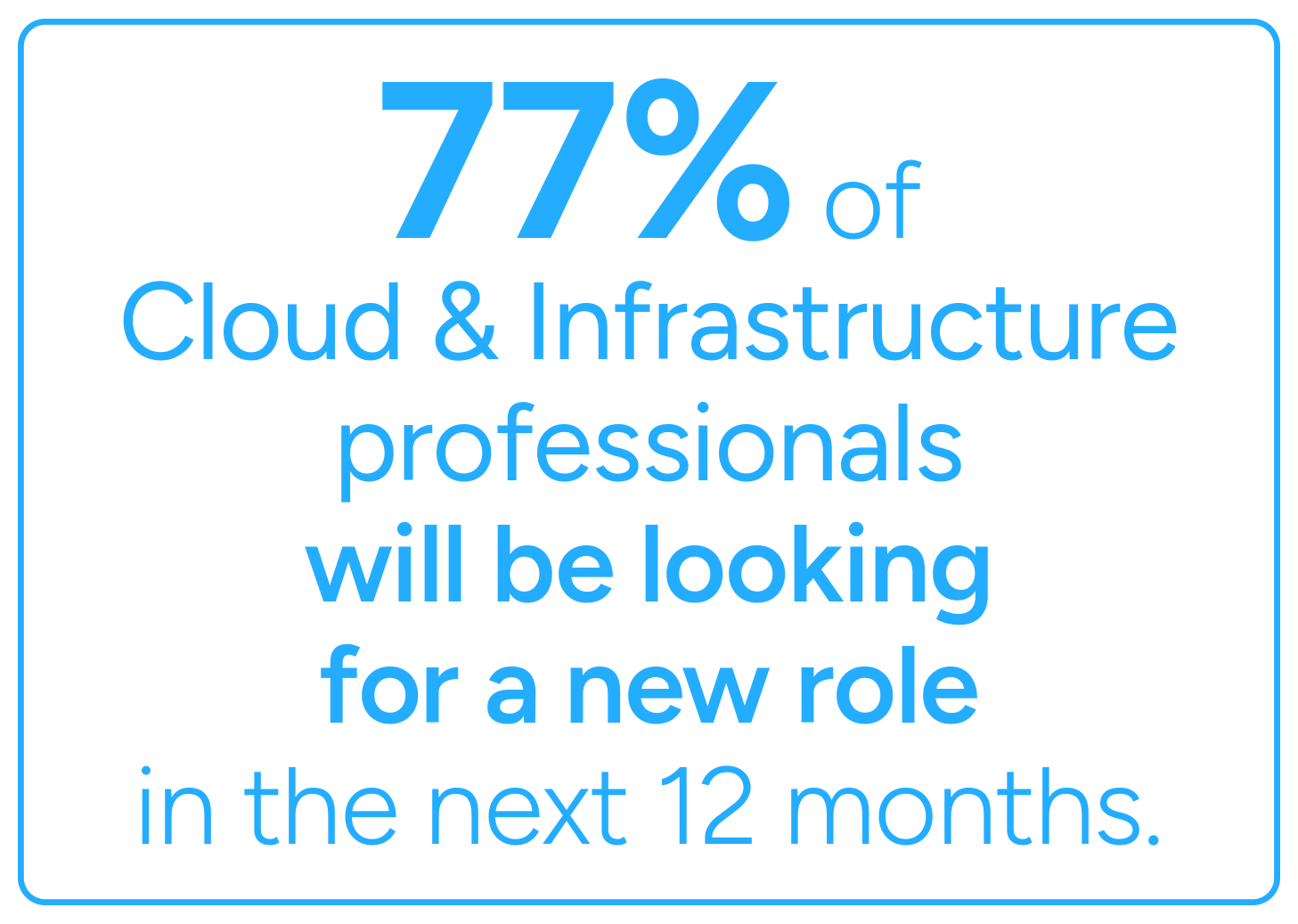
Cloud and infrastructure talent is on the move, but finding the right skills takes more than a job ad
From cloud platforms to infrastructure operations, the skills employers need can vary significantly. Understanding where talent is available, and what motivates specialists to move, can make all the difference.
Finding it difficult to fill a technical role?
Our Cloud & Infrastructure team can help you understand candidate availability, salary expectations and the best approach to finding professionals with the right technical expertise.
Whether you need one experienced cloud engineer, support for an infrastructure upgrade or additional capability across your IT operations team, tell us what you’re hiring and we’ll get the right specialist involved.
Application Support teams provide assistance and support to end-users of an organisation’s software applications, identifying and resolving technical issues and providing guidance on usage. They may also liaise with software development teams to suggest improvements or fixes.
An Automation Engineer is responsible for developing and maintaining automated solutions that improve efficiency and reduce costs. They work to streamline processes and reduce manual intervention wherever possible.
Capacity Planners analyse business data and IT infrastructure performance metrics to determine optimal capacity levels, ensuring that IT resources meet current and future business requirements.
A Cloud Architect is responsible for designing and overseeing the implementation of cloud-based systems and infrastructure. They ensure that cloud solutions are aligned with business objectives and meet technical requirements.
A Cloud Engineer is a professional who is responsible for designing, planning, implementing, and managing cloud-based infrastructure and applications. Cloud Engineers work with various cloud computing technologies, including infrastructure as a service (IaaS), platform as a service (PaaS), and software as a service (SaaS).
A Database Administrator is responsible for the installation, configuration, and maintenance of an organisation’s databases. They must ensure that the databases are secure, efficient, and available at all times. They must have expertise in database management systems, scripting languages, and backup and recovery techniques.
Delivery Leads are responsible for overseeing the delivery of projects or programmes of work, ensuring that they meet scope, budget, and quality requirements. They may also provide guidance and support to team members.
A DevOps Engineer is responsible for developing and maintaining the systems and infrastructure that enable software development and deployment. They work to improve collaboration between developers and operations teams, streamlining processes and reducing time-to-market.
Book a chat with one of our specialist Cloud & Infrastructure consultants.
Fill in your details and one of our recruitment specialists will be in touch to chat next steps.
Find the tech people your business needs, backed by award-winning service.
Specialist Expertise Across Every Technology Vertical —
Dedicated teams trained in each tech skill for faster, accurate matching.
35+ Years Serving Australia's Largest Employers —
80+ Preferred Supplier Agreements with 92% client retention over the last five years.
Security-Cleared Talent for Sensitive Environments —
Established networks of candidates holding Australian Government security clearances, including Baseline, NV1 and NV2.
Certified to ISO 9001:2015 —
Quality-certified systems and processes built for consistency and continuous improvement.
Diversity, Built into the Work —
We work with trusted partners to widen access to tech careers and support greater representation of women, neurodiverse, LGBTIQA+ and First Nations talent
Clicks recruits professionals responsible for building, maintaining, securing and improving technology infrastructure.
This includes Cloud Engineers, Cloud Architects, Systems Engineers, Network Engineers, Infrastructure Specialists, System Administrators, DevOps Engineers, Service Delivery Managers and IT Support professionals.
We help employers recruit for cloud migration, infrastructure modernisation, ongoing operations and support environments.
Our consultants understand that the skills needed to build new infrastructure can be different from those required to keep existing systems running.
A Cloud Architect typically designs the overall cloud environment, including how systems are structured, connected, secured and scaled.
A Cloud Engineer focuses more on implementing, maintaining and improving that environment.
Both roles are important, but they require different levels of design, implementation and operational experience.
When recruiting, we help employers clarify whether they need someone to define the technical direction, deliver the work or manage the environment once it’s running.
Yes. Cloud migration projects often require several capabilities, from architecture and engineering to networking, security and ongoing operational support.
We recruit professionals with experience moving workloads, applications and infrastructure into cloud environments, including Microsoft Azure, AWS and Google Cloud.
Our consultants work with employers to understand the technology involved, project scope and level of experience required.
That includes identifying people who can manage the transition while keeping critical systems available.
Many organisations operate across a mix of cloud platforms, on-premise infrastructure and legacy systems.
Recruiting for these environments means understanding how the technologies connect, not just whether someone has experience with a particular cloud provider.
We look at candidates’ experience with networking, integration, infrastructure automation, security and operational support, alongside their platform knowledge.
The aim is to find people who understand how the different parts of your environment work together.
Certifications can be useful, particularly when working with platforms such as AWS, Azure or Google Cloud. They demonstrate knowledge of particular technologies and practices.
But they don’t replace practical experience.
We encourage employers to consider what candidates have built, migrated, maintained or improved. Experience managing incidents, solving infrastructure problems and working in complex environments can be just as important as formal qualifications.
The right balance depends on the role and the systems involved.
Yes. Many skills developed in traditional infrastructure roles remain relevant in cloud environments.
Experience with networking, servers, virtualisation, operating systems, security and infrastructure management can provide a strong foundation for cloud engineering.
The next step is usually building practical experience with cloud platforms, automation and modern deployment practices.
For candidates considering this move, it’s worth showing employers how existing skills transfer and what cloud-specific experience you’ve developed.
Yes. We’ve supported organisations operating complex technology environments where reliability, availability and operational continuity are essential.
These roles can require experience with infrastructure monitoring, incident management, disaster recovery, network resilience and maintaining systems that cannot afford extended downtime.
Our consultants look beyond platform knowledge to understand how candidates have managed operational risk, supported critical infrastructure and worked under pressure.
That experience can be particularly important in government, financial services, healthcare and other essential services.
Application Support teams provide assistance and support to end-users of an organisation’s software applications, identifying and resolving technical issues and providing guidance on usage. They may also liaise with software development teams to suggest improvements or fixes.
An Automation Engineer is responsible for developing and maintaining automated solutions that improve efficiency and reduce costs. They work to streamline processes and reduce manual intervention wherever possible.
Capacity Planners analyse business data and IT infrastructure performance metrics to determine optimal capacity levels, ensuring that IT resources meet current and future business requirements.
A Cloud Architect is responsible for designing and overseeing the implementation of cloud-based systems and infrastructure. They ensure that cloud solutions are aligned with business objectives and meet technical requirements.
A Cloud Engineer is a professional who is responsible for designing, planning, implementing, and managing cloud-based infrastructure and applications. Cloud Engineers work with various cloud computing technologies, including infrastructure as a service (IaaS), platform as a service (PaaS), and software as a service (SaaS).
A Database Administrator is responsible for the installation, configuration, and maintenance of an organisation’s databases. They must ensure that the databases are secure, efficient, and available at all times. They must have expertise in database management systems, scripting languages, and backup and recovery techniques.
Delivery Leads are responsible for overseeing the delivery of projects or programmes of work, ensuring that they meet scope, budget, and quality requirements. They may also provide guidance and support to team members.
A DevOps Engineer is responsible for developing and maintaining the systems and infrastructure that enable software development and deployment. They work to improve collaboration between developers and operations teams, streamlining processes and reducing time-to-market.